Twenty galleries from Jim Schubert’s model collection and individual projects.
Browse the archive
Choose a collection
Selected collection
Collection 04
25 photographs in this collection. Every slide has a permanent address
that can be copied and shared.
Photograph descriptions were drafted with assistance from Google
Gemini and may contain errors. IPMS Seattle has reviewed and
corrected them where practical. If you can improve an
identification, please
contact the web coordinator.
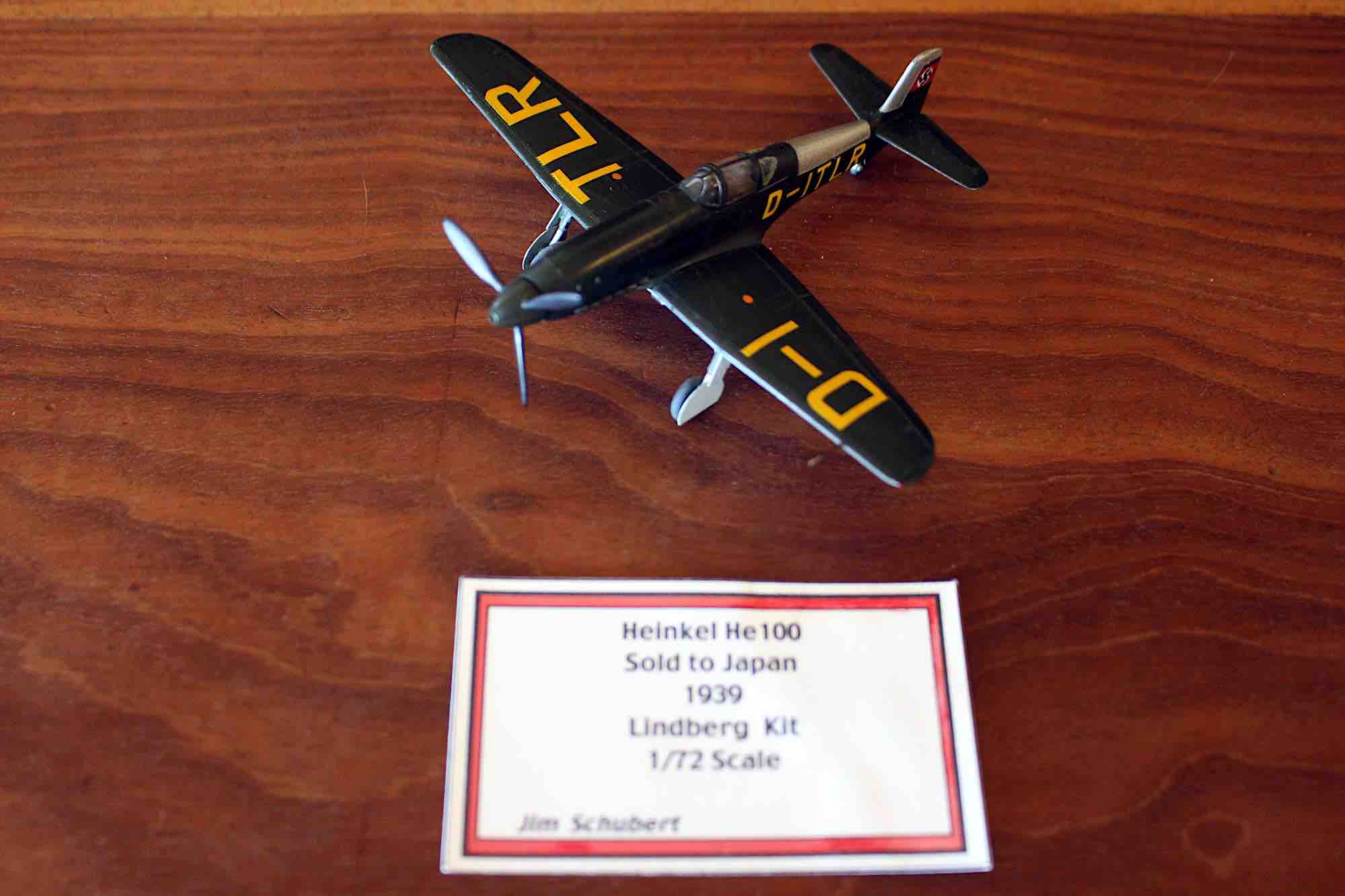
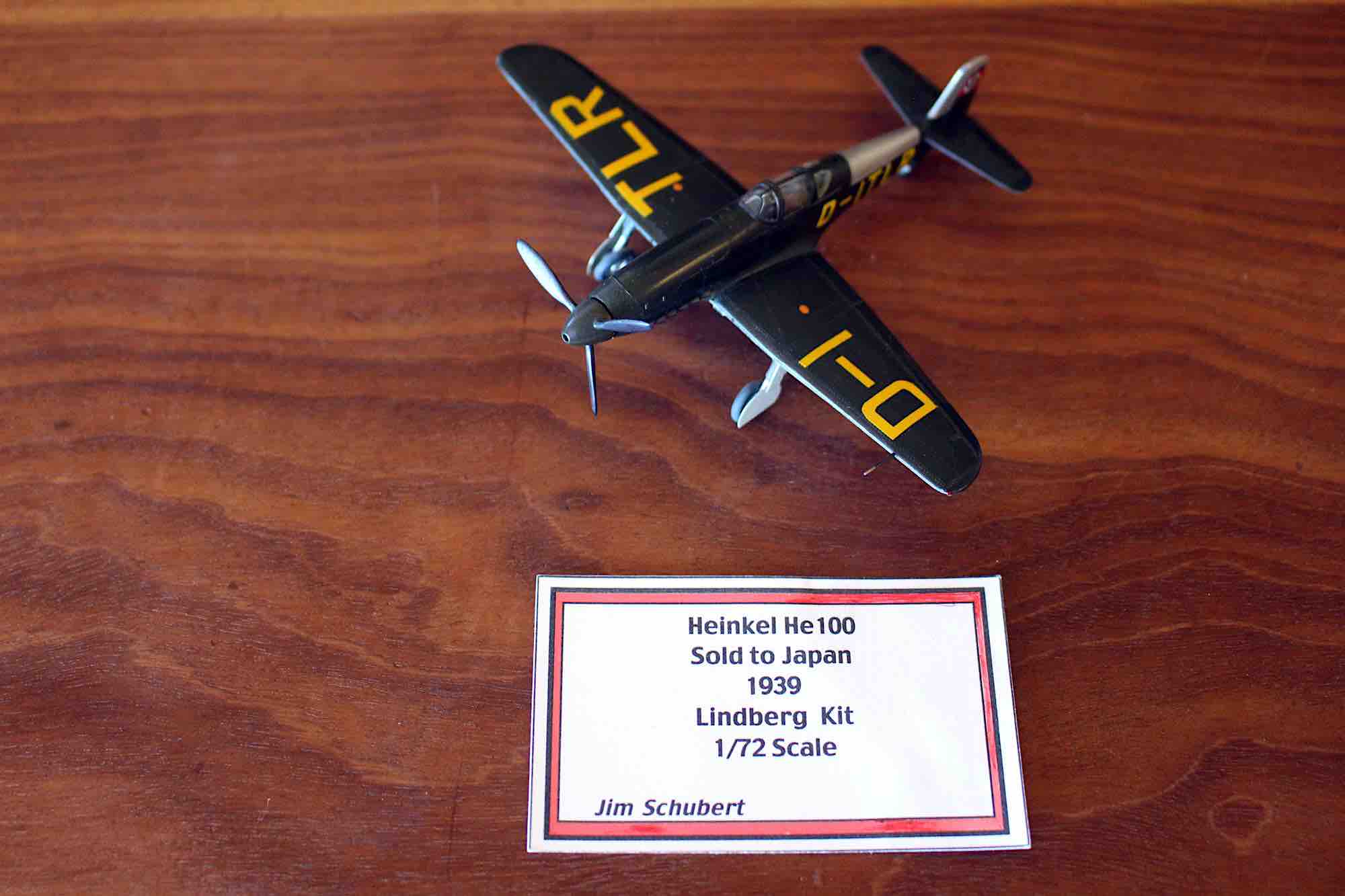
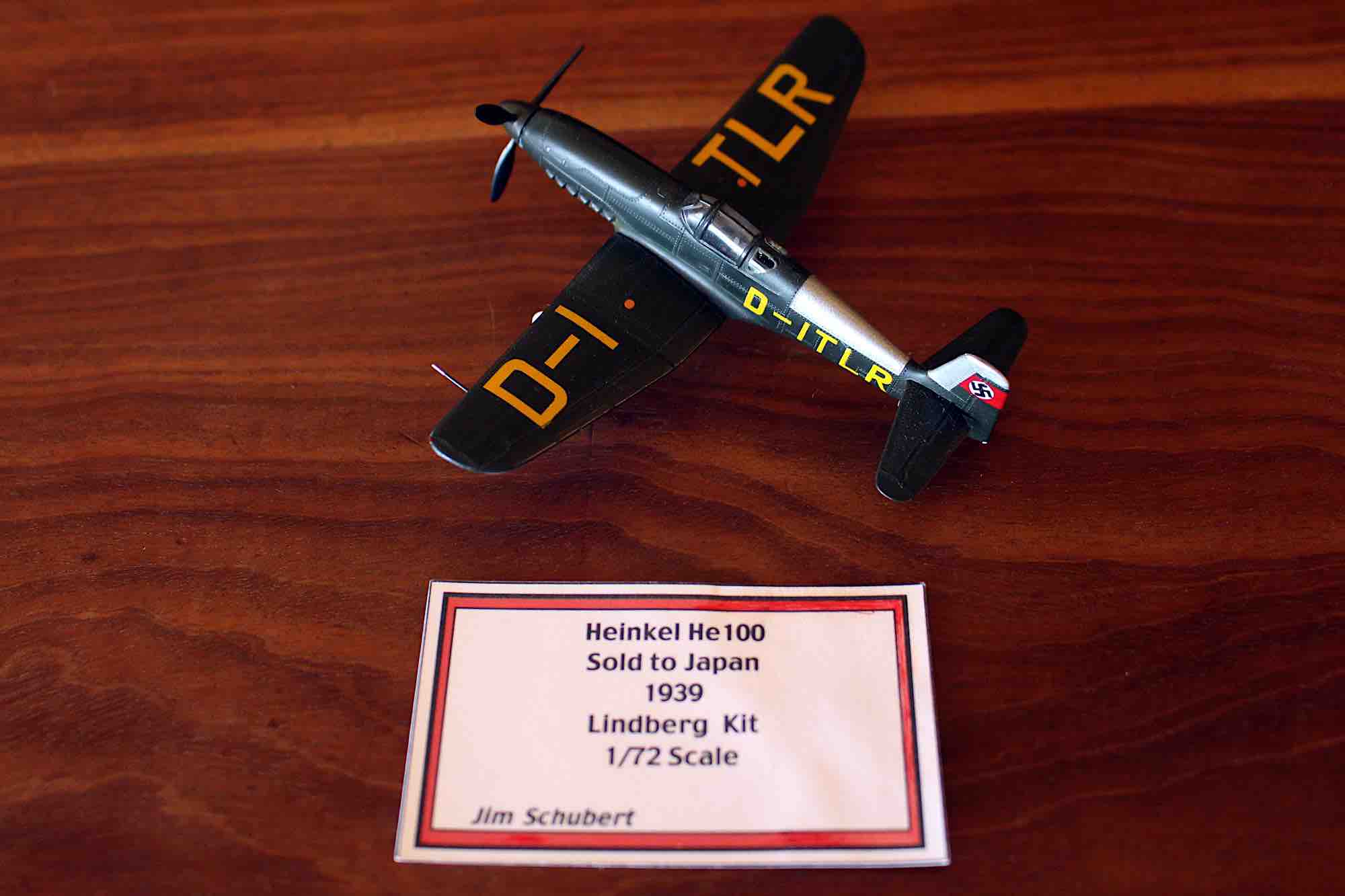
Photograph 1 of 25 · 1935–1936: Heinkel's previous fighter, the He 112, lost the Luftwaffe's primary fighter contract to the simpler, cheaper Messerschmitt Bf 109. Determined to beat Messerschmitt, Ernst Heinkel authorized "Projekt 1035"—a clean-sheet fighter designed strictly for extreme speed.
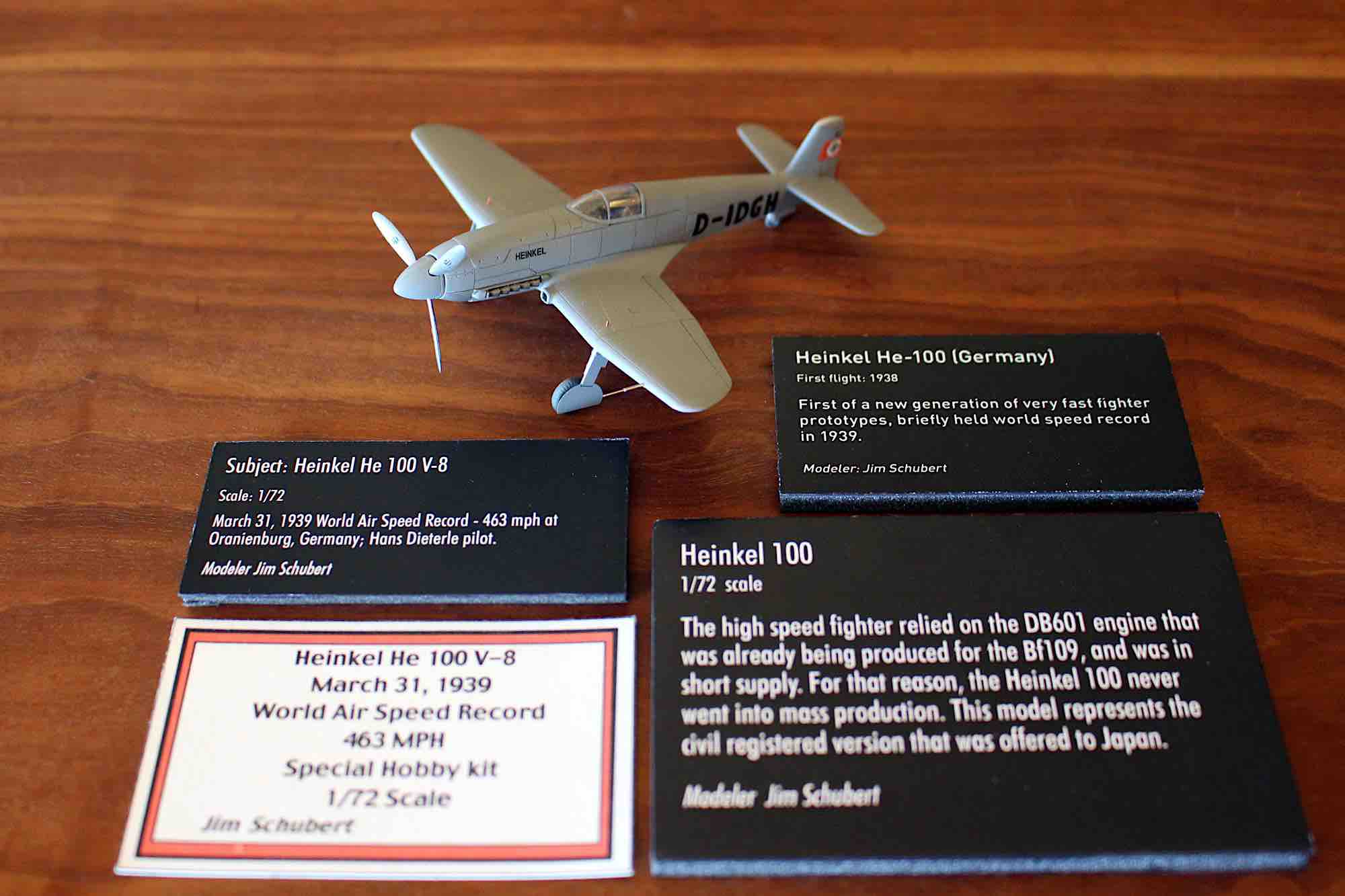
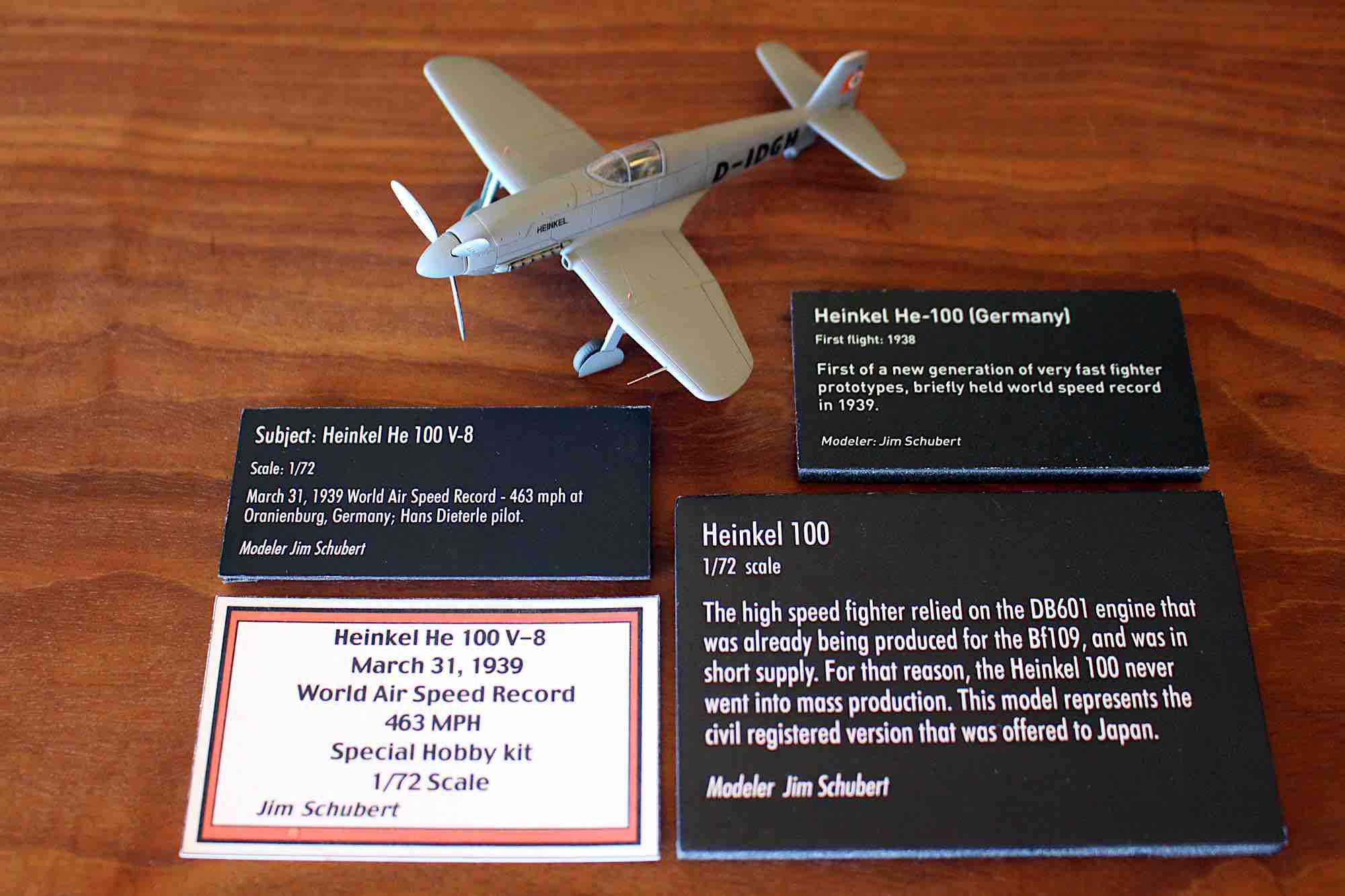
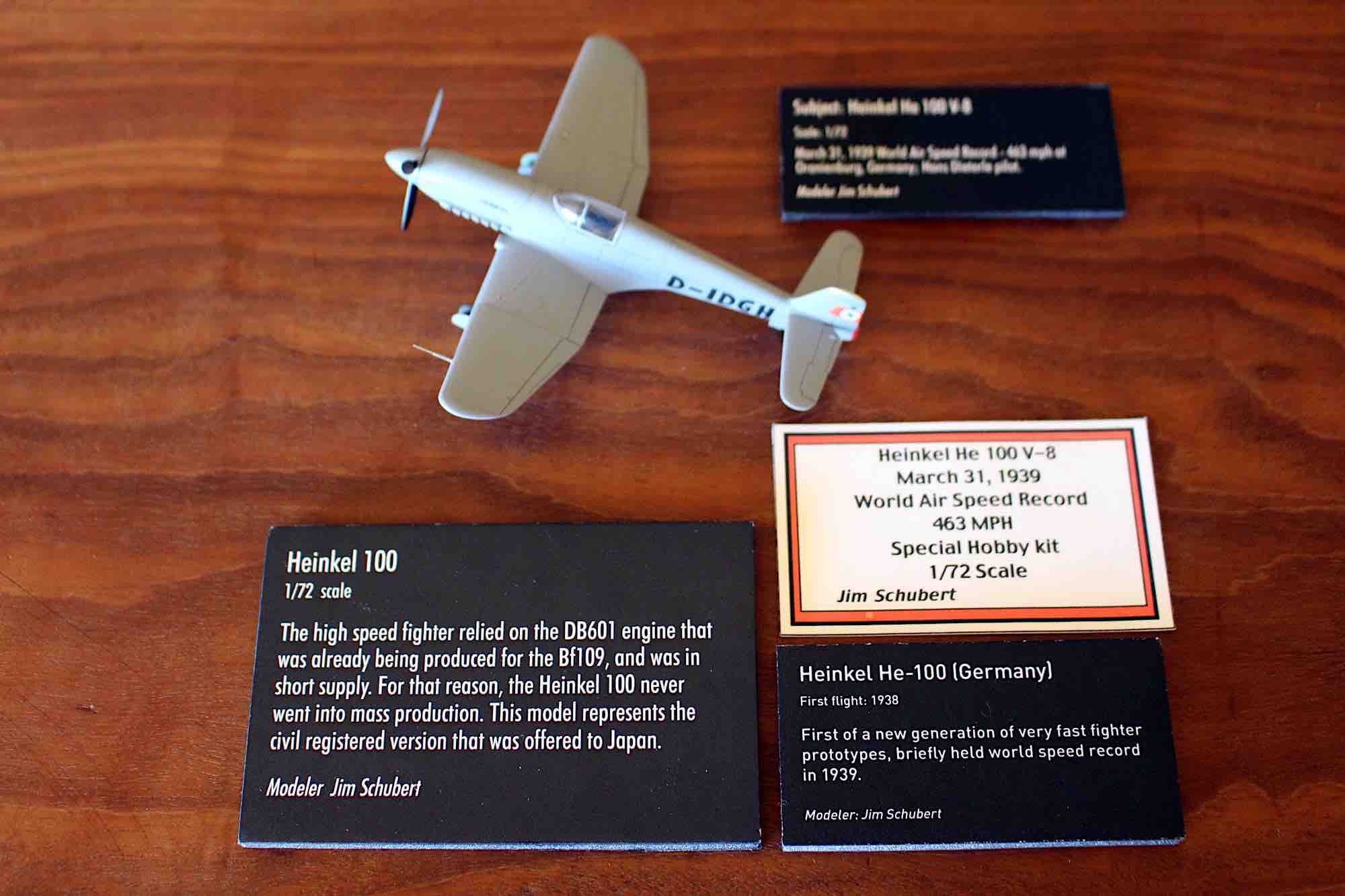
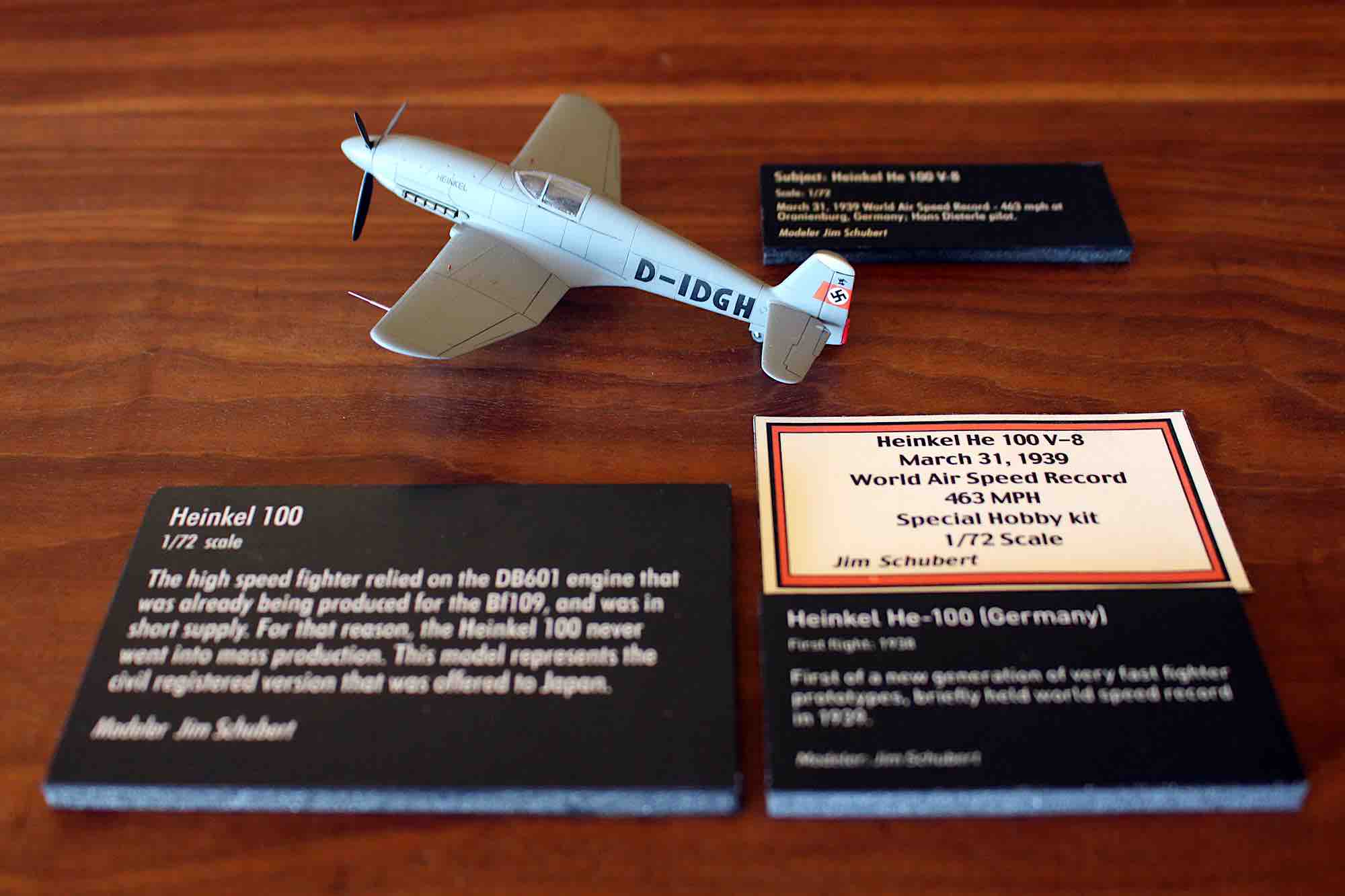
Photograph 2 of 25 · January 22, 1938: The first prototype (He 100 V1) took its maiden flight, easily surpassing existing speed standards. March 30, 1939: The specially modified eighth prototype (He 100 V8), flown by test pilot Hans Dieterle, shattered the absolute world airspeed record, reaching 746.6 km/h (463.9 mph).
Photograph 3 of 25 · The engine coolant was pressurized, allowed to vaporize into steam, and then condensed inside the outer skin panels of the wings. While highly efficient for breaking records, a single stray bullet to the wing would puncture the condenser lines, instantly causing the engine to overheat and fail.
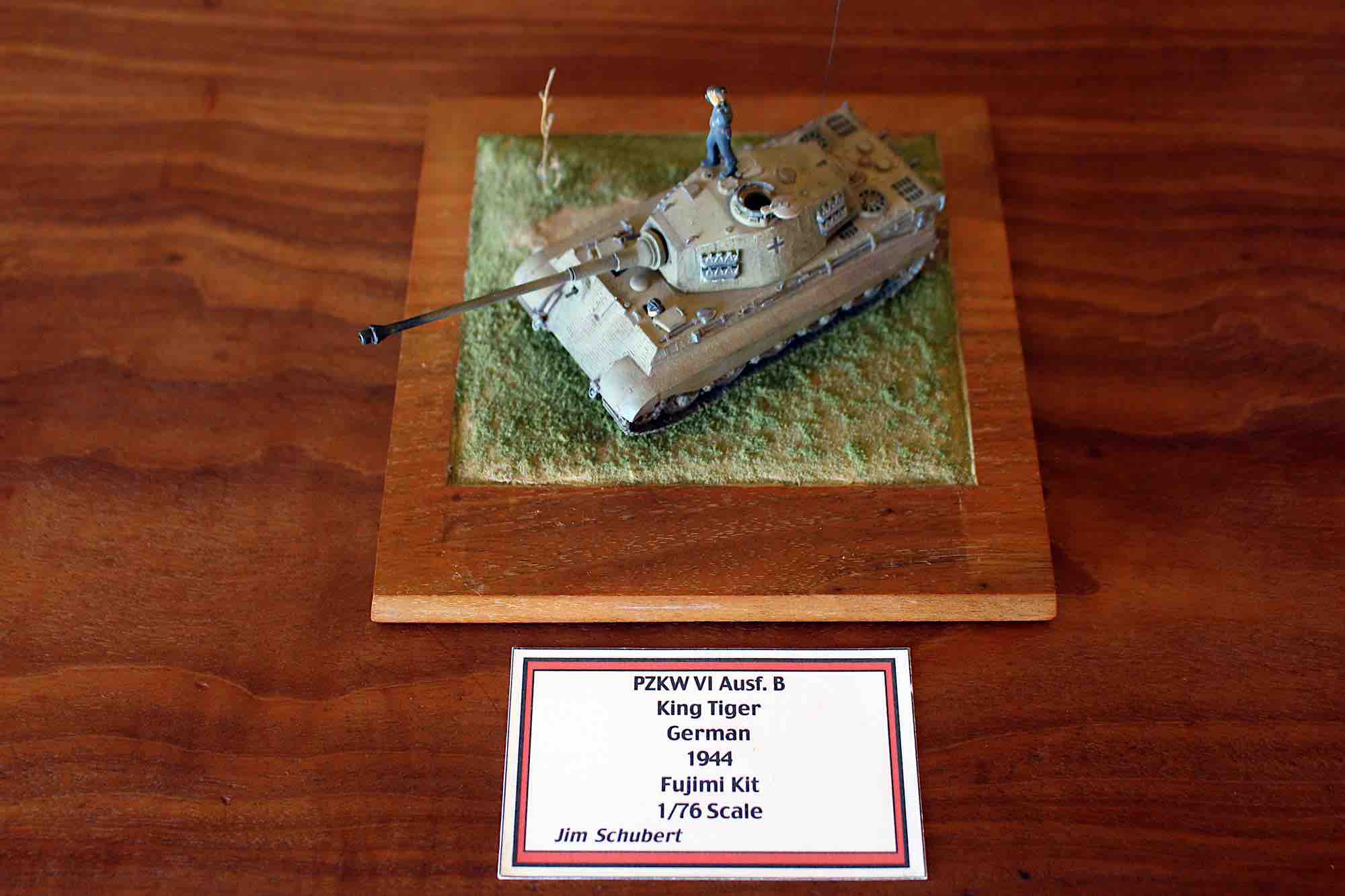
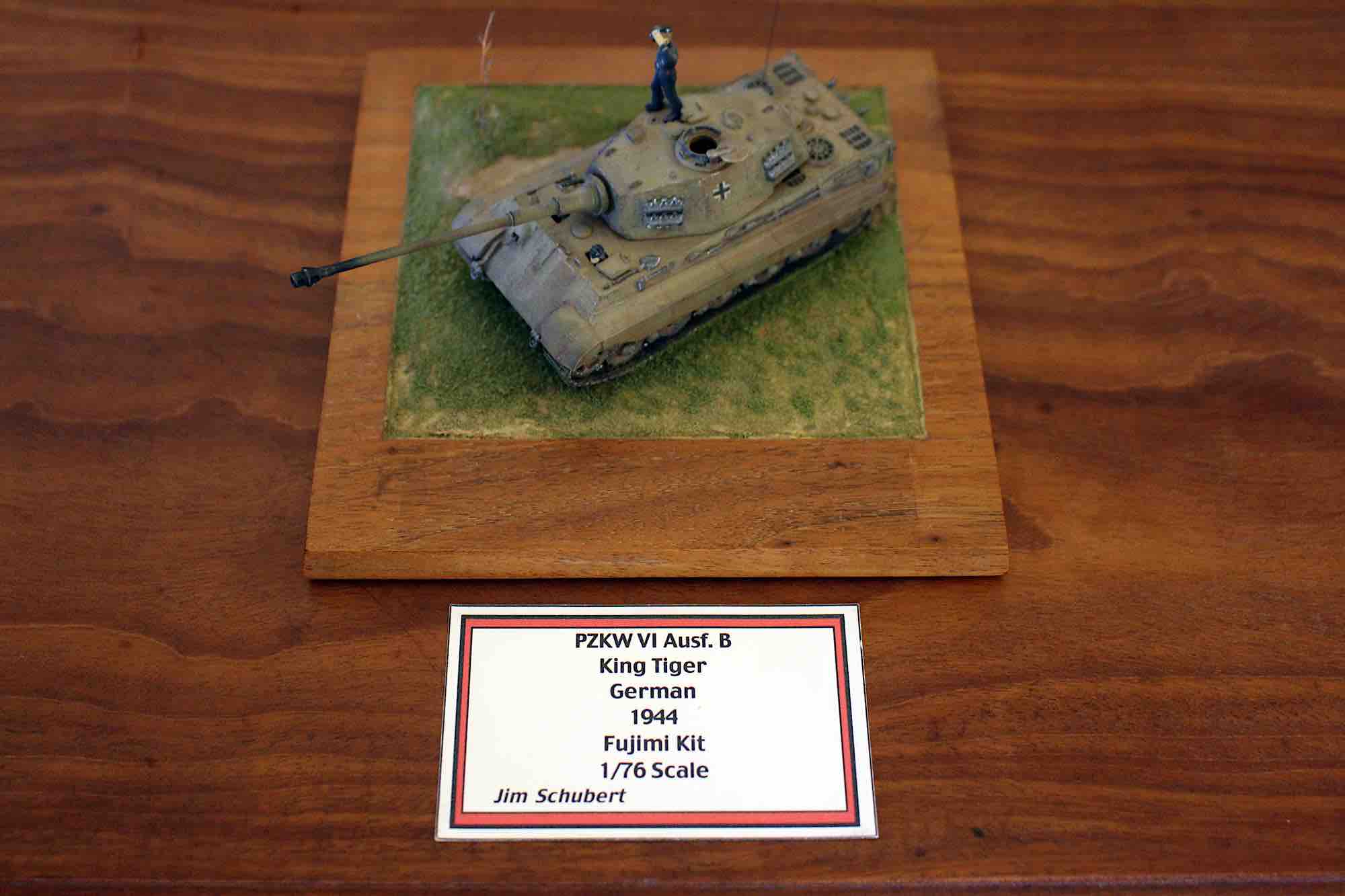
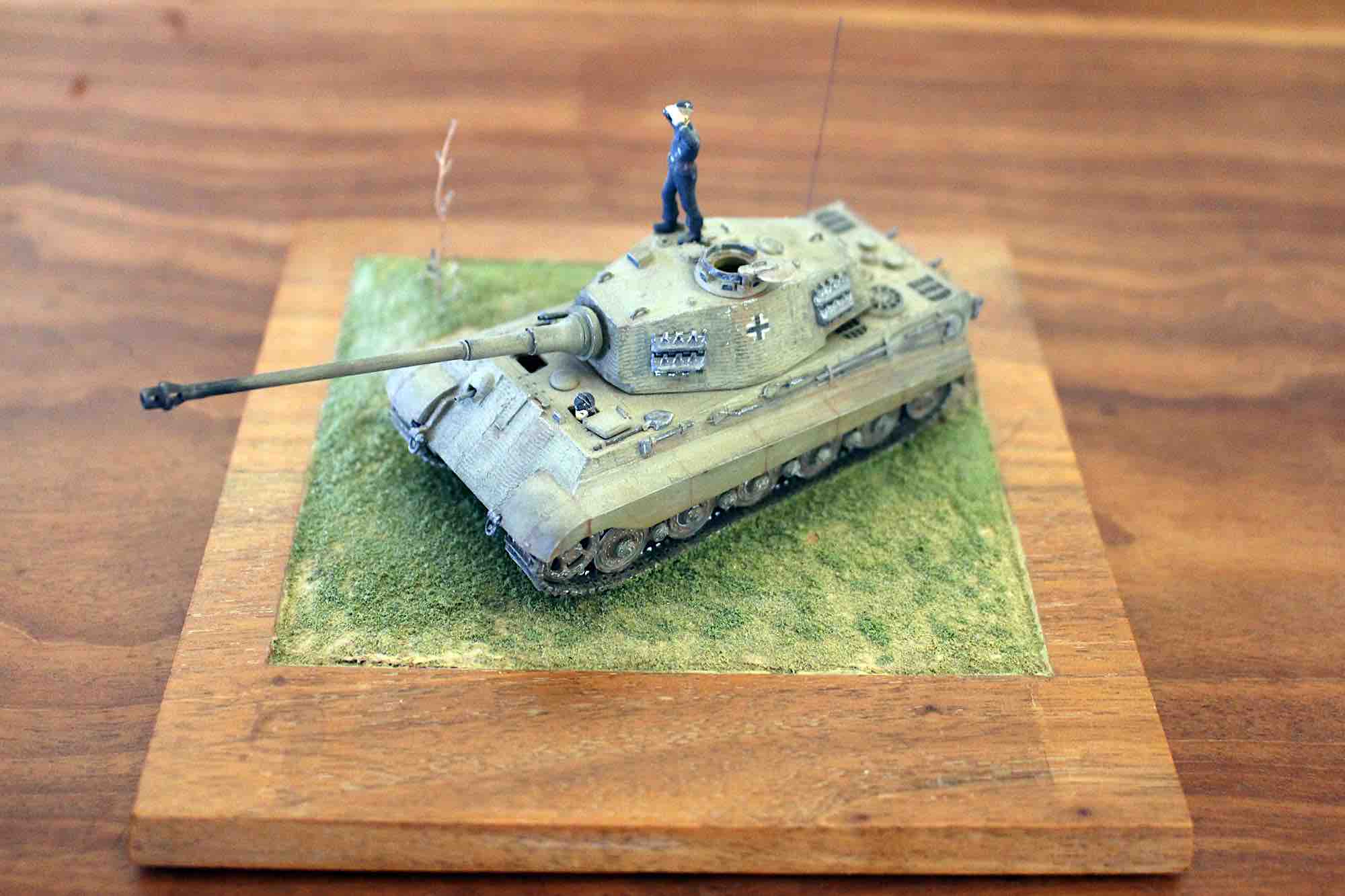
Photograph 4 of 25 · The Panzerkampfwagen VI Ausf. B, commonly known as the Tiger II, King Tiger, or Königstiger, was Germany's heaviest and most powerful production tank deployed during World War II. Entering service in early 1944, it combined the thick, sloping armor of the Panther tank with the lethal fire-power of the 8.8 cm KwK 43 L/71 main gun. Development began in 1941 to find a successor to the original Tiger I. Two major firms submitted competing chassis design concepts: Porsche and Henschel.
Photograph 5 of 25 · Porsche prematurely manufactured 50 turrets expecting to win the contract. Because Henschel's chassis design ultimately won, those early 50 "Porsche" turrets (distinguished by their curved front) were fitted to the initial production chassis. The remaining 439 production tanks used the simplified, flat-faced Henschel turret, which resolved a shot-trap vulnerability present in the Porsche design. Its 8.8 cm KwK 43 gun was devastatingly effective, capable of penetrating the frontal armor of virtually any Allied or Soviet tank at ranges well beyond the enemy's own effective return-fire envelope.
Photograph 6 of 25 · The engine and drivetrain were originally designed for a lighter vehicle. Moving 69 tons placed tremendous stress on the transmission, resulting in frequent mechanical breakdowns. Its immense weight broke bridges, got bogged down in soft mud, and consumed massive amounts of fuel—a resource Germany desperately lacked in the final years of the war. More King Tigers were abandoned and destroyed by their own crews due to lack of fuel or mechanical failure than were ever lost to direct enemy action.
Photograph 7 of 25 · One of several reasons that the Heinkel HE-100 never went into production was that the critical Daimler-Benz DB 601 engine was strictly rationed and prioritized for the Messerschmitt Bf 109 and Bf 110.
Photograph 8 of 25 · After the HE-100 was abandoned by RLM, Nazi Propaganda Minister Joseph Goebbels utilized the remaining 12 pre-production He 100D-1 airframes for an elaborate deception campaign, where the 12 planes were repeatedly painted and photographed at various bases. The aircraft were publicized as a terrifying new operational fighter called the He 113. The Japanese evaluated the prototypes, but they abandoned them as they prioritized their own designs.
Photograph 9 of 25 · To showcase the aircraft's potential, Ernst Heinkel pushed for high-profile speed records. The specific airframe depicted in your model, the He 100 V-8 (D-IDGH), was heavily modified with clipped wings and a boosted Daimler-Benz DB 601 engine. On March 31, 1939, pilot Hans Dieterle flew it to a blazing 463.6 mph (746.6 km/h), securing the absolute world speed record.
Photograph 10 of 25 · With domestic production blocked, Heinkel was permitted to sell prototype aircraft abroad. Japan purchased three He 100 D-0 pre-production models and the assembly drawings. They planned to build the aircraft locally under the designation AXHe1, but the project was eventually abandoned as Japan shifted focus to its own indigenous designs. The Soviet Union purchased several prototypes for evaluation. Soviet engineers heavily studied Heinkel's surface-cooling designs and overall aerodynamics, which heavily influenced later Soviet experimental high-speed aircraft designs.
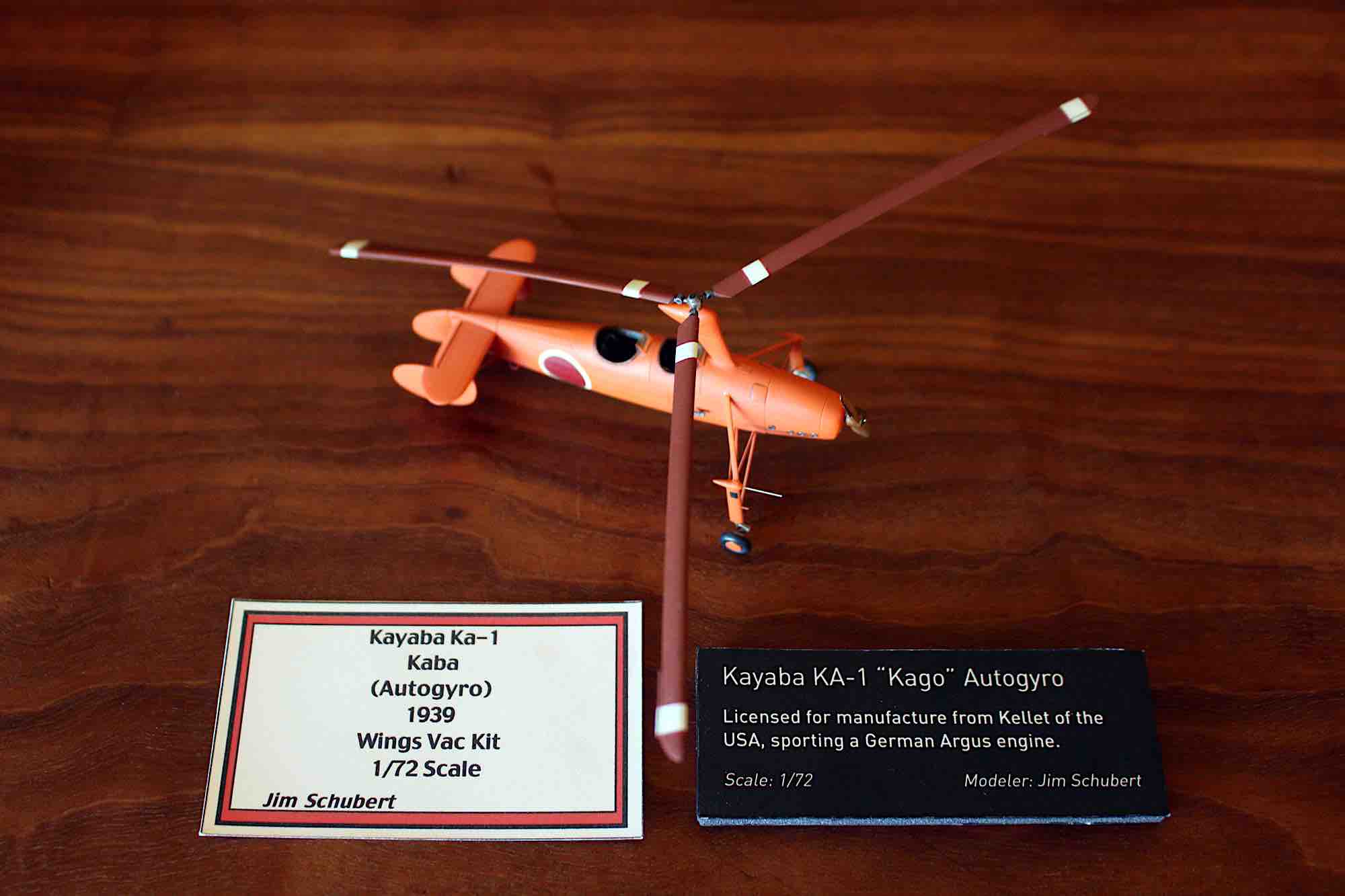
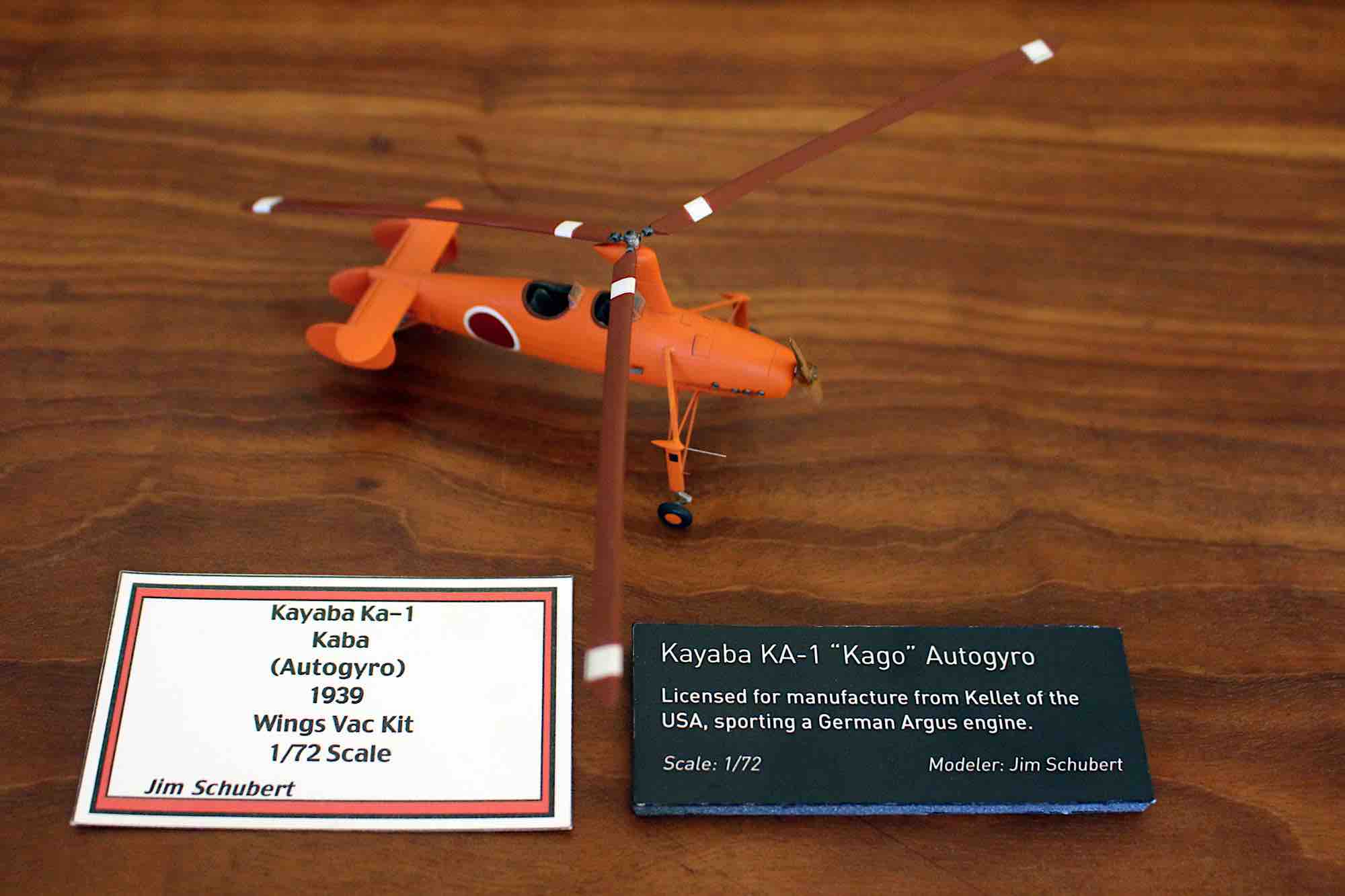
Photograph 11 of 25 · Kayaba Ka-1 (also known as the Ka-Gō), an autogyro utilized by the Imperial Japanese Army during World War II. It holds a distinct place in aviation history as one of the very few operational autogyros to see combat duties during the war.
Photograph 12 of 25 · The Kayaba Ka-1 was initially designed for short-takeoff observation and directing artillery fire due to its ability to fly at extremely slow speeds and land in tight spaces. Later in the war, some Ka-1 units were converted for maritime patrol. Operating from small landing decks on converted army depot ships (like the Akitsu Maru), they flew coastal patrols carrying small depth charges to hunt Allied submarines.
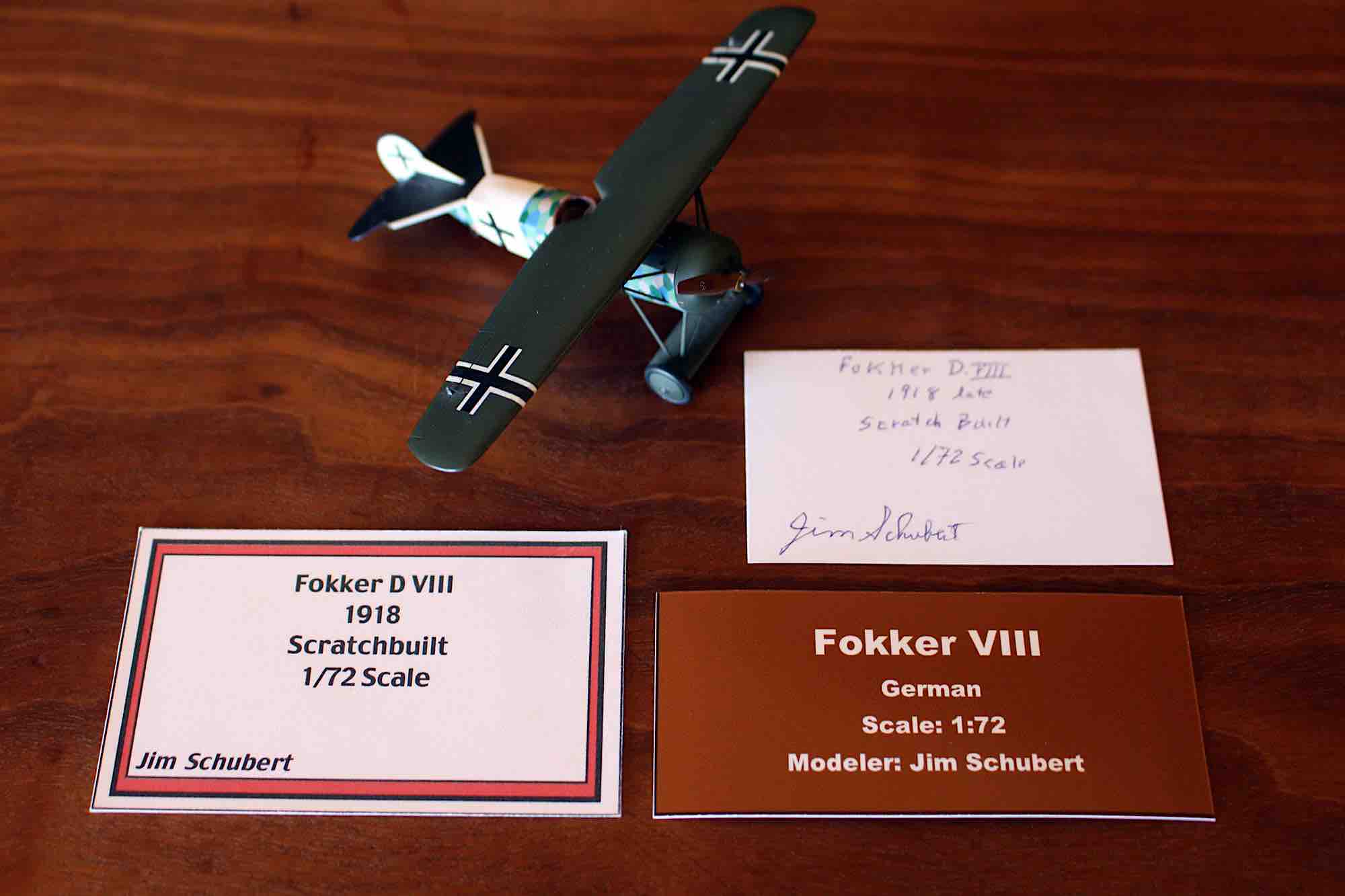
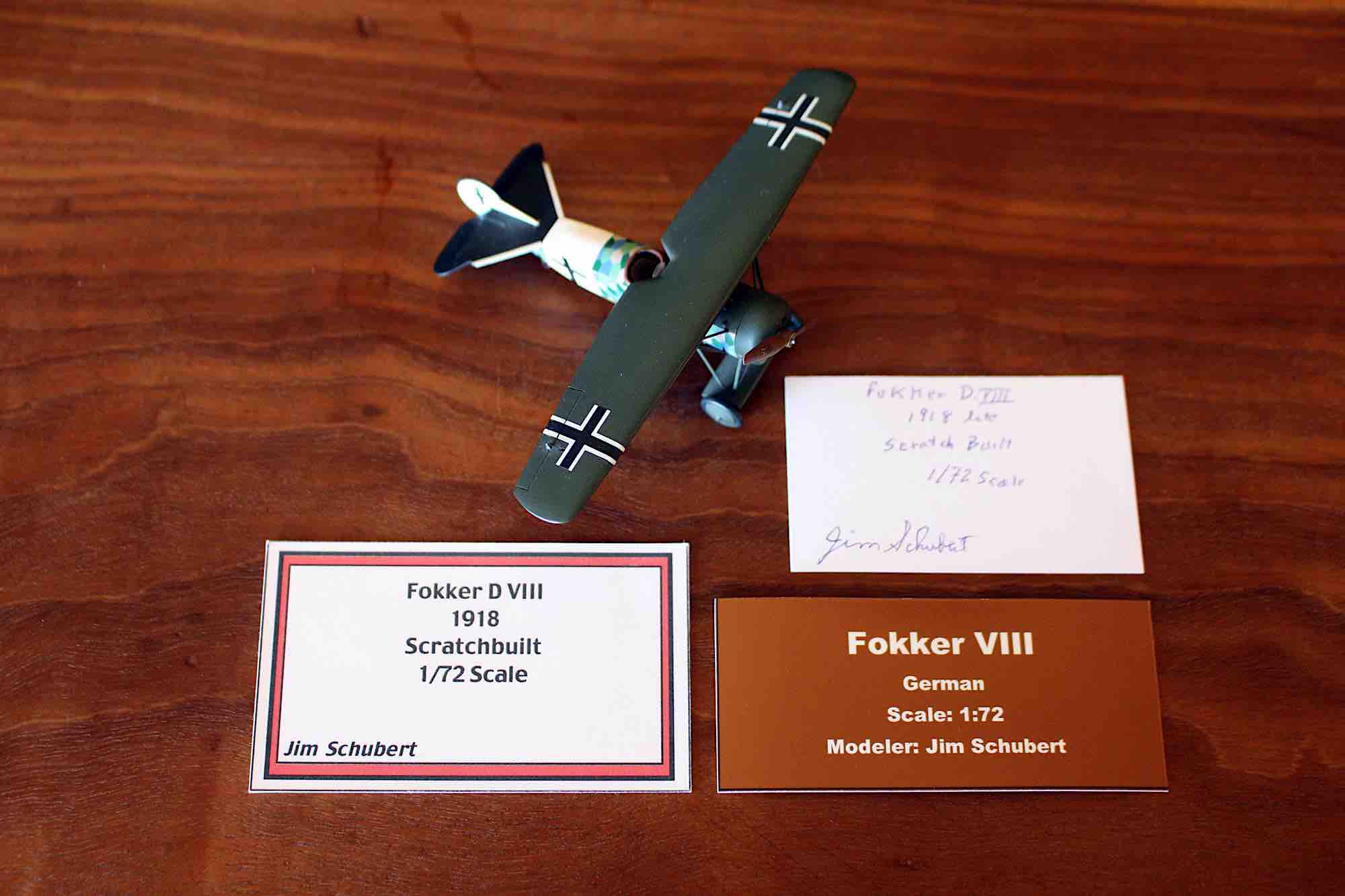
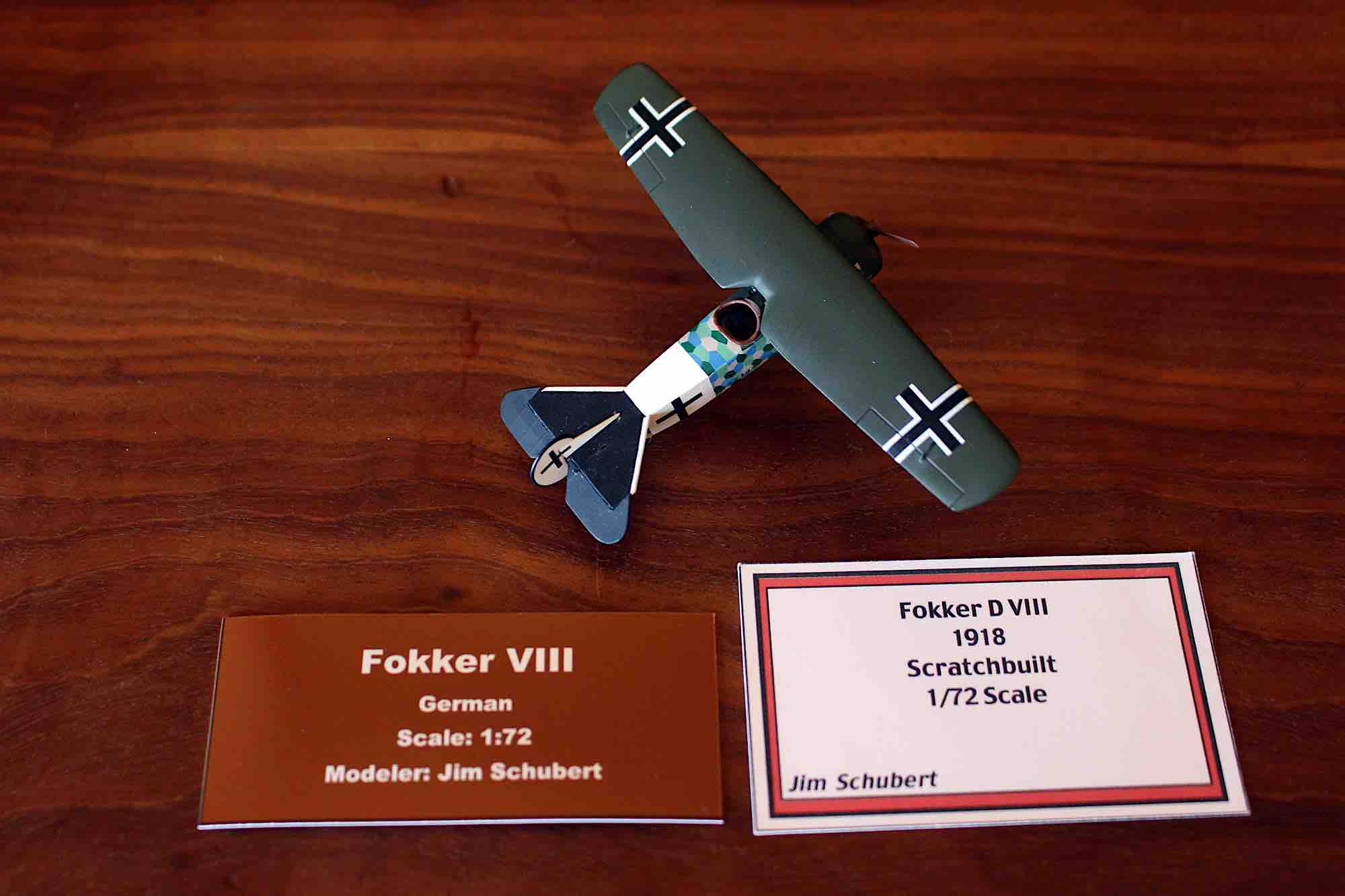
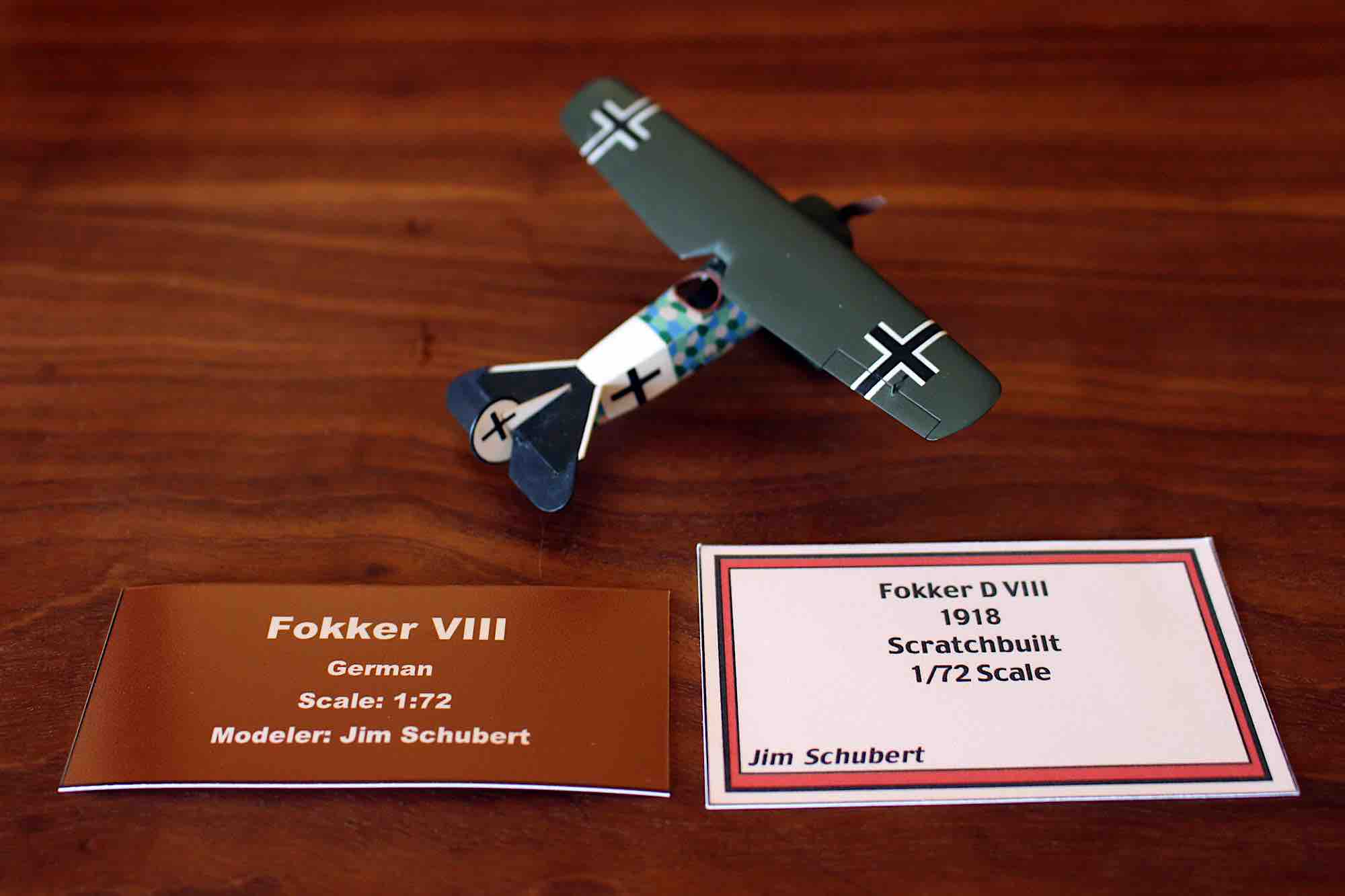
Photograph 13 of 25 · The Fokker D.VIII was one of the most advanced fighter designs to emerge during World War I. Designed by Reinhold Platz, it was nicknamed the "Flying Razor" by Allied pilots because of its razor-thin, single-wing profile.
Photograph 14 of 25 · Unlike the common biplanes and triplanes of the era, the Fokker D.VIII was a parasol monoplane. It featured a single cantilevered wooden wing mounted above the fuselage on struts, completely eliminating the need for drag-inducing external bracing wires. This gave the pilot an unparalleled, unobstructed field of vision.
Photograph 15 of 25 · The aircraft initially entered frontline service in late July/August 1918 under the designation Fokker E.V. It showed immediate combat promise—pilot Emil Rolff scored its first aerial victory on August 17. After two fatal wing failures, the entire fleet was abruptly grounded just weeks after its debutAn investigation revealed that the design itself wasn't flawed, but the execution was. Anthony Fokker had subcontracted the wing manufacturing to the Perzina Piano Factory. Urgent wartime production pressures had led to poor quality control, unseasoned wood usage, and structural alterations that trapped moisture and caused internal rotting.
Photograph 16 of 25 · Fokker strictly overhauled production, reinforced the internal wing spars, and the aircraft was cleared to return to the front lines in October 1918 under the new designation Fokker D.VIII. Though it was widely praised by German pilots as an exceptional interceptor, it arrived too late to change the course of the war. Only about 85 made it to frontline units before the Armistice on November 11, 1918. It is credited with achieving the final confirmed aerial victory of World War I.
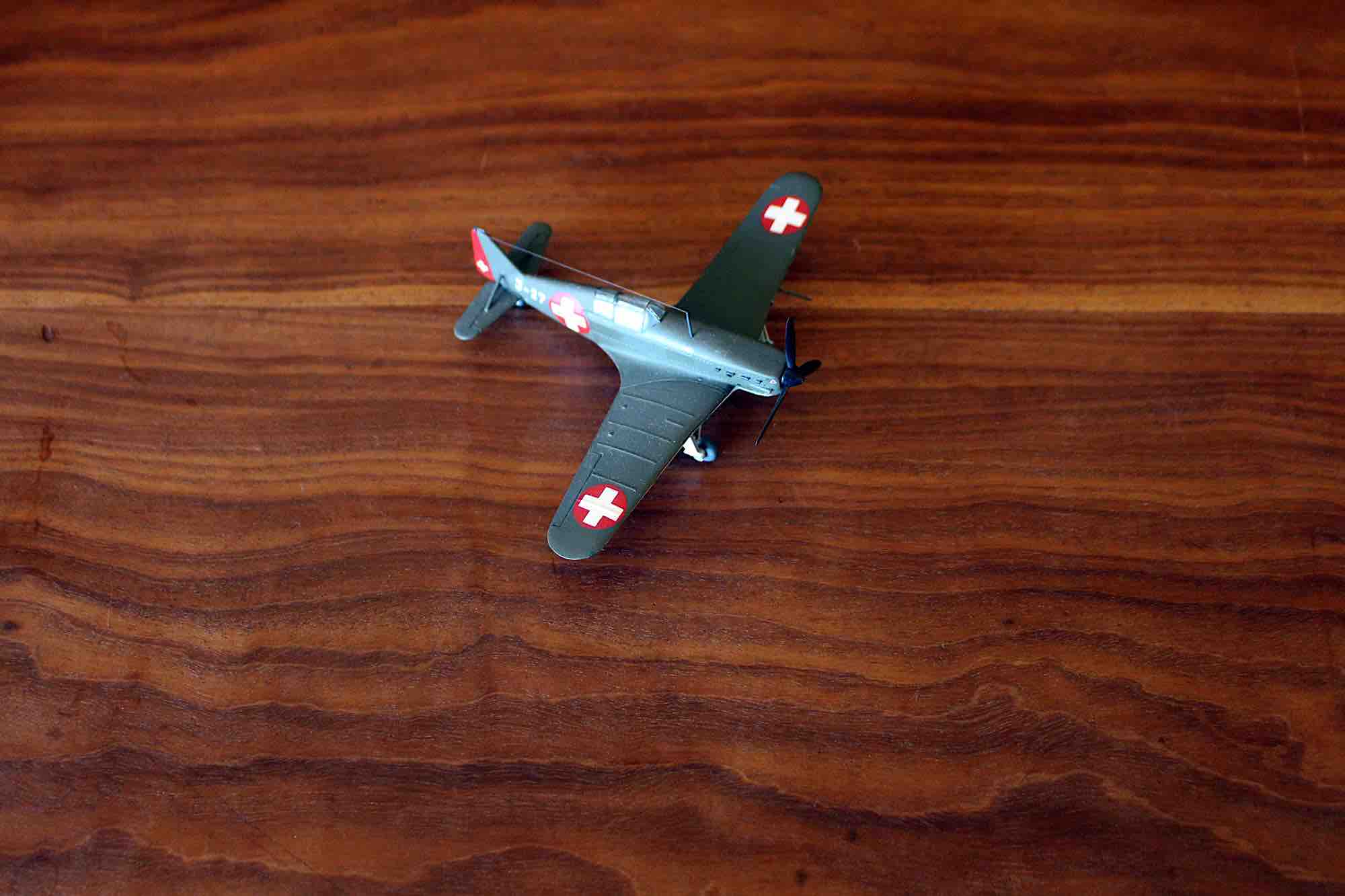
Photograph 17 of 25 · Before the war, Switzerland was seeking to modernize its small air force. Impressed by the early Morane-Saulnier M.S.405 prototypes, the Swiss government secured a licensing agreement to manufacture the aircraft domestically.
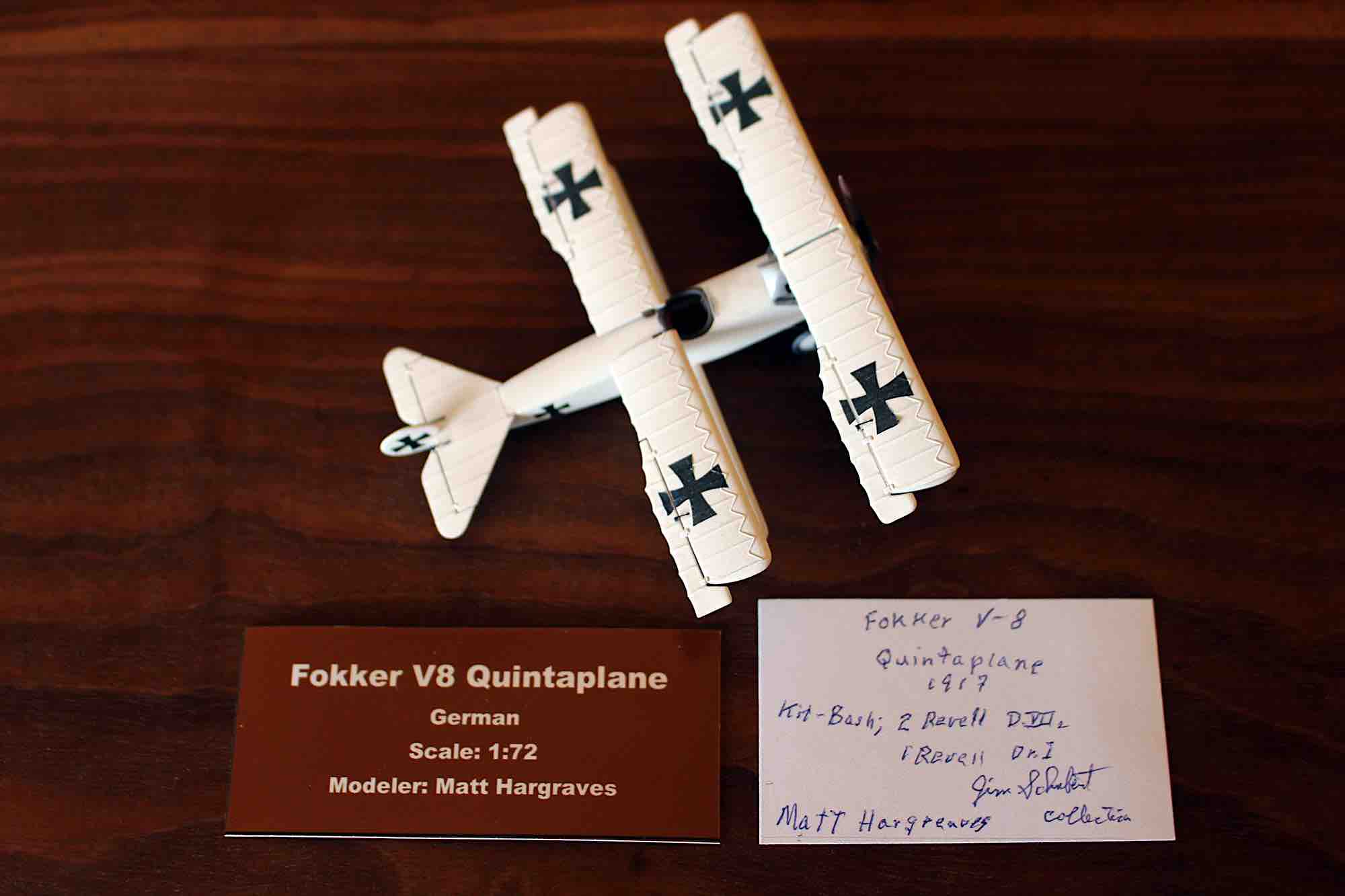
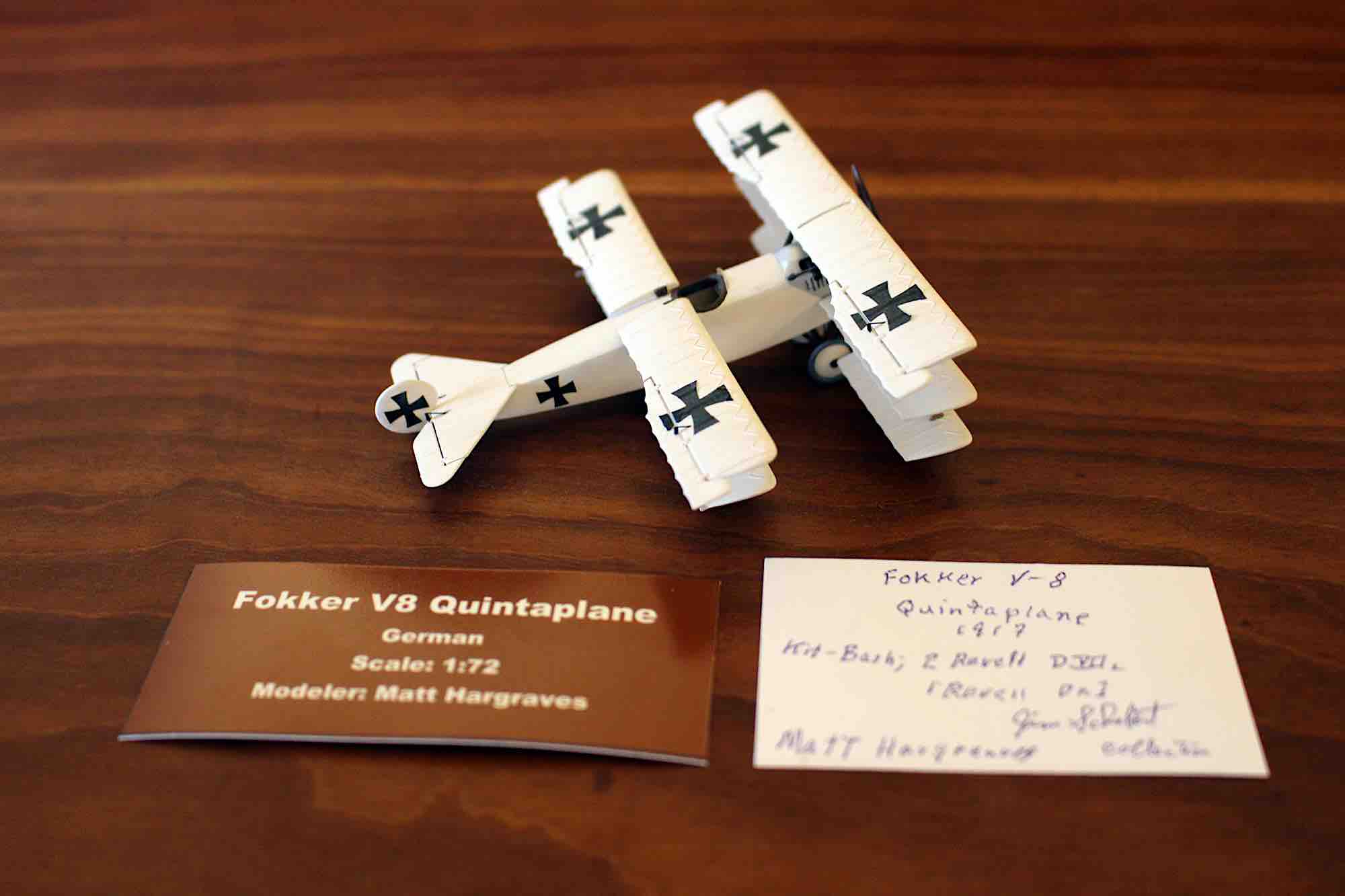
Photograph 18 of 25 · Following the initial success of the famous Fokker Dr.I triplane, aviation builder Anthony Fokker impulsively reasoned that if three wings provided great maneuverability, five wings would be even better. It was constructed using airframe components salvaged from the experimental Fokker V.6. It was reluctantly designed by Chief Engineer Reinhold Platz.
Photograph 19 of 25 · The project was an absolute failure. The aircraft was incredibly unstable with a dangerously misplaced center of lift, heavy drag, and terrible handling. Anthony Fokker personally took the controls for its only two brief test flights in October 1917. It was deemed un-flyable and immediately ordered to be scrapped. Platz later regarded the design as such a monstrosity that he refused to take credit for it.
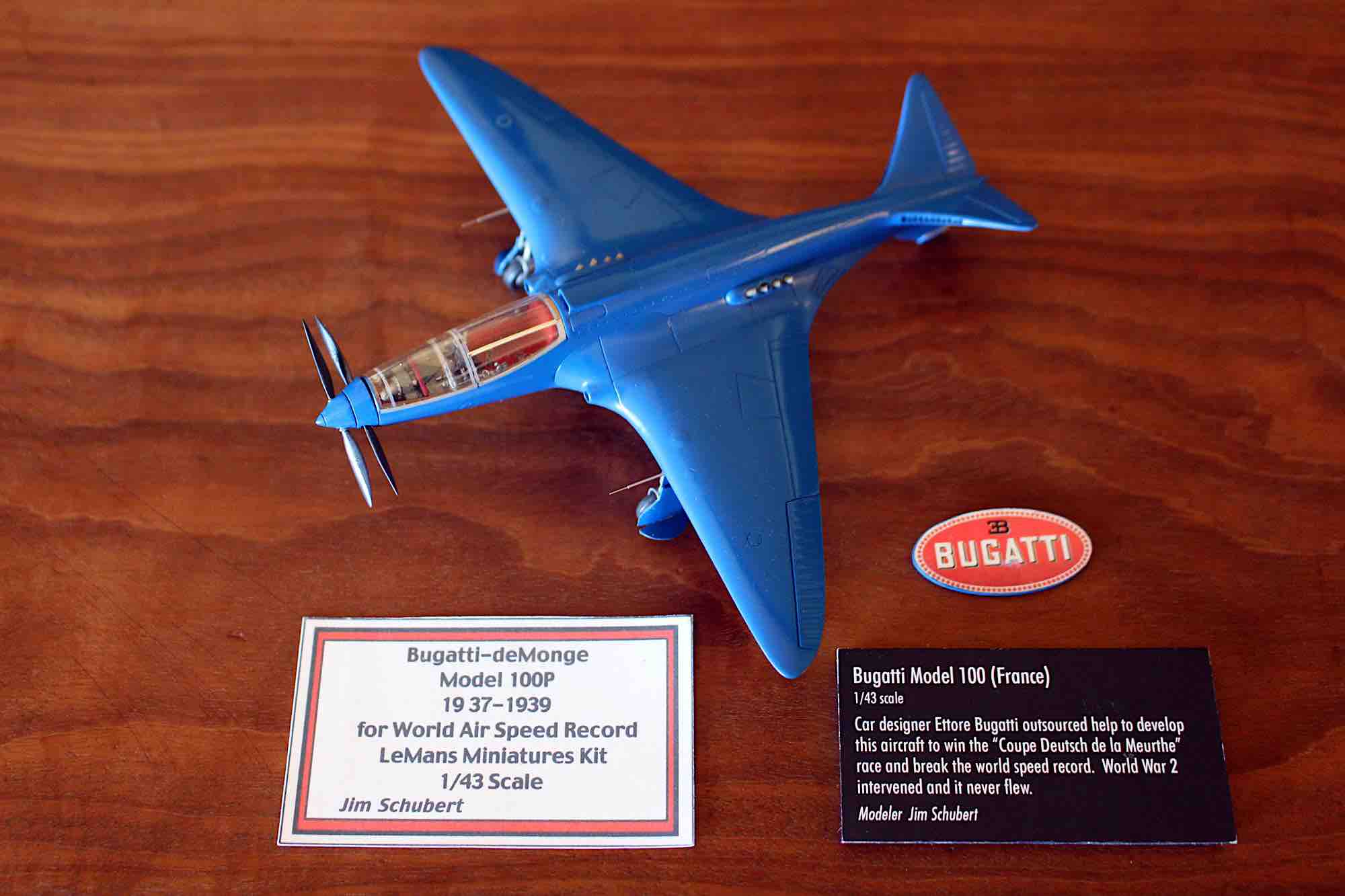
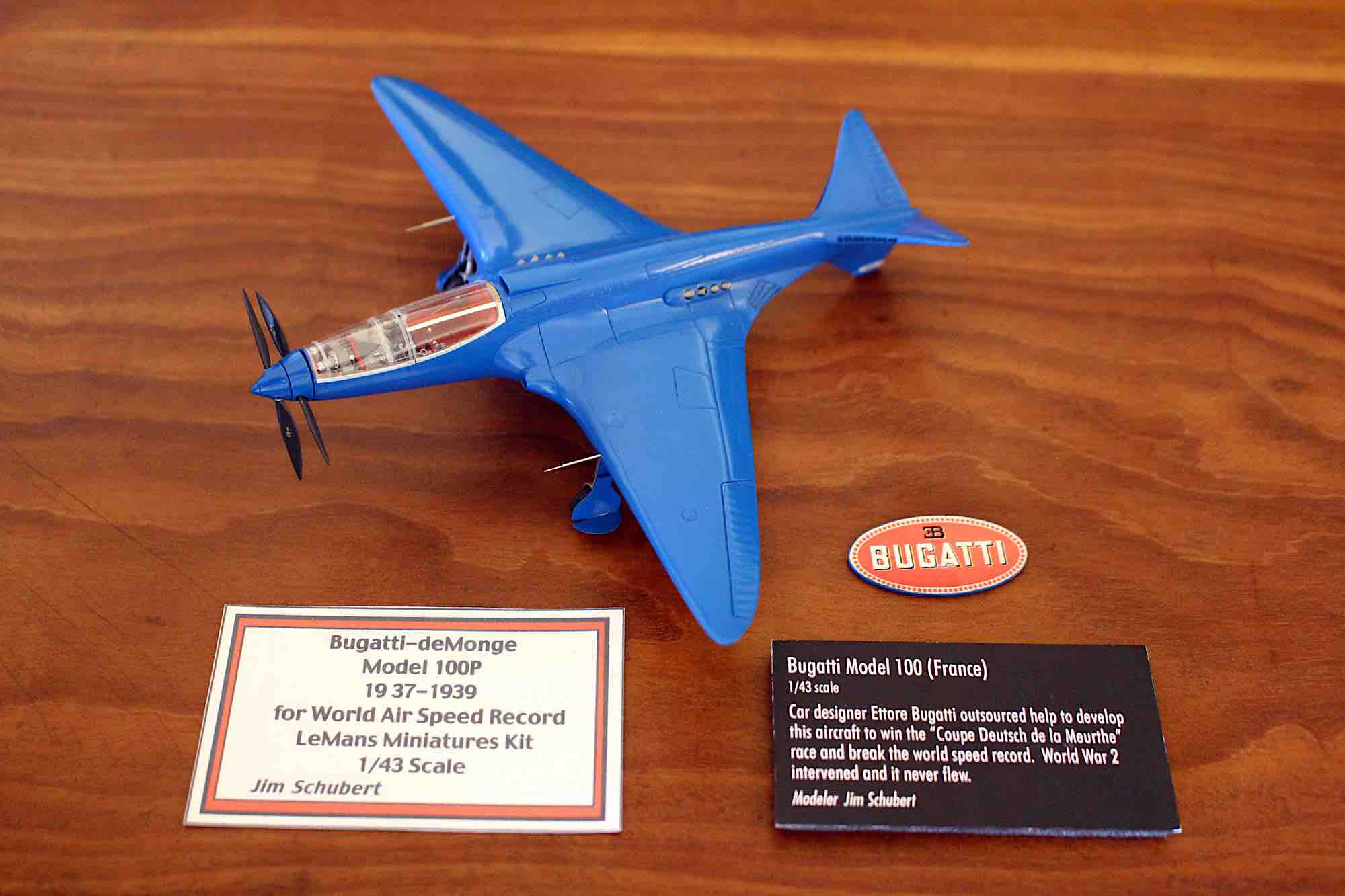
Photograph 20 of 25 · Bugatti-deMonge Model 100P - Industrialist Ettore Bugatti set his sights on breaking the world landplane airspeed record, which was then held by Howard Hughes in the Hughes H-1 Racer. Bugatti collaborated with brilliant Belgian aeronautical engineer Louis de Monge to build a purpose-built air racer to compete in the prestigious Deutsch de la Meurthe Cup Race. As the aircraft neared completion on the second floor of a furniture factory in Paris, World War II broke out. Due to its high performance, the French Air Ministry approached Bugatti about developing a light military fighter variant based on the design, designated the Model 110P.
Photograph 21 of 25 · In June 1940, the aircraft was roughly 85% complete when German forces rapidly advanced on Paris. Fearing that the advanced technology would fall into Nazi hands, Bugatti disassembled the 100P, lowered it out of a second-story window, and evacuated it to the French countryside. It spent the next 30 years hidden safely away in a dusty barn. Ettore Bugatti died in 1947 without ever seeing his masterwork take to the skies.
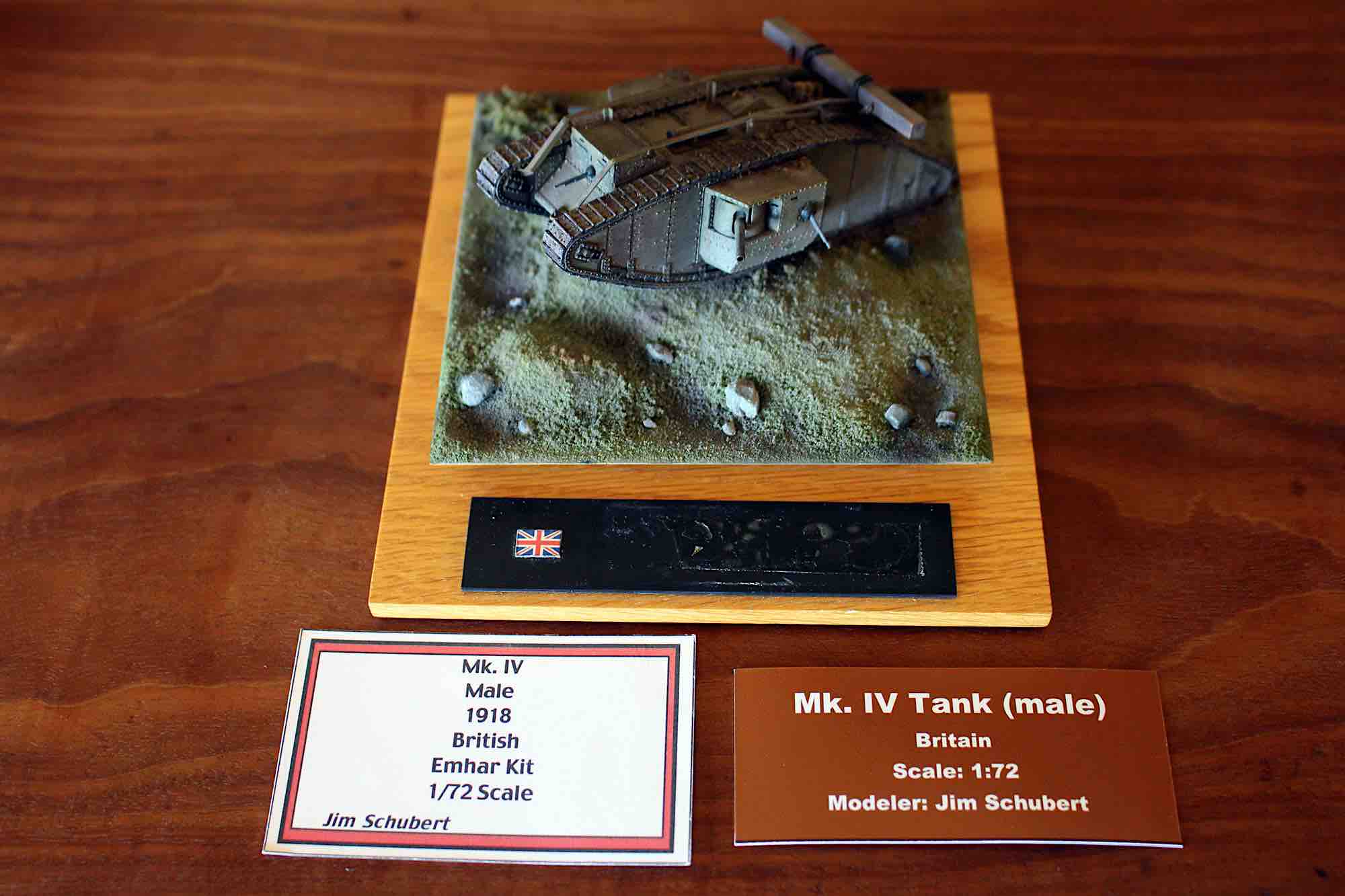
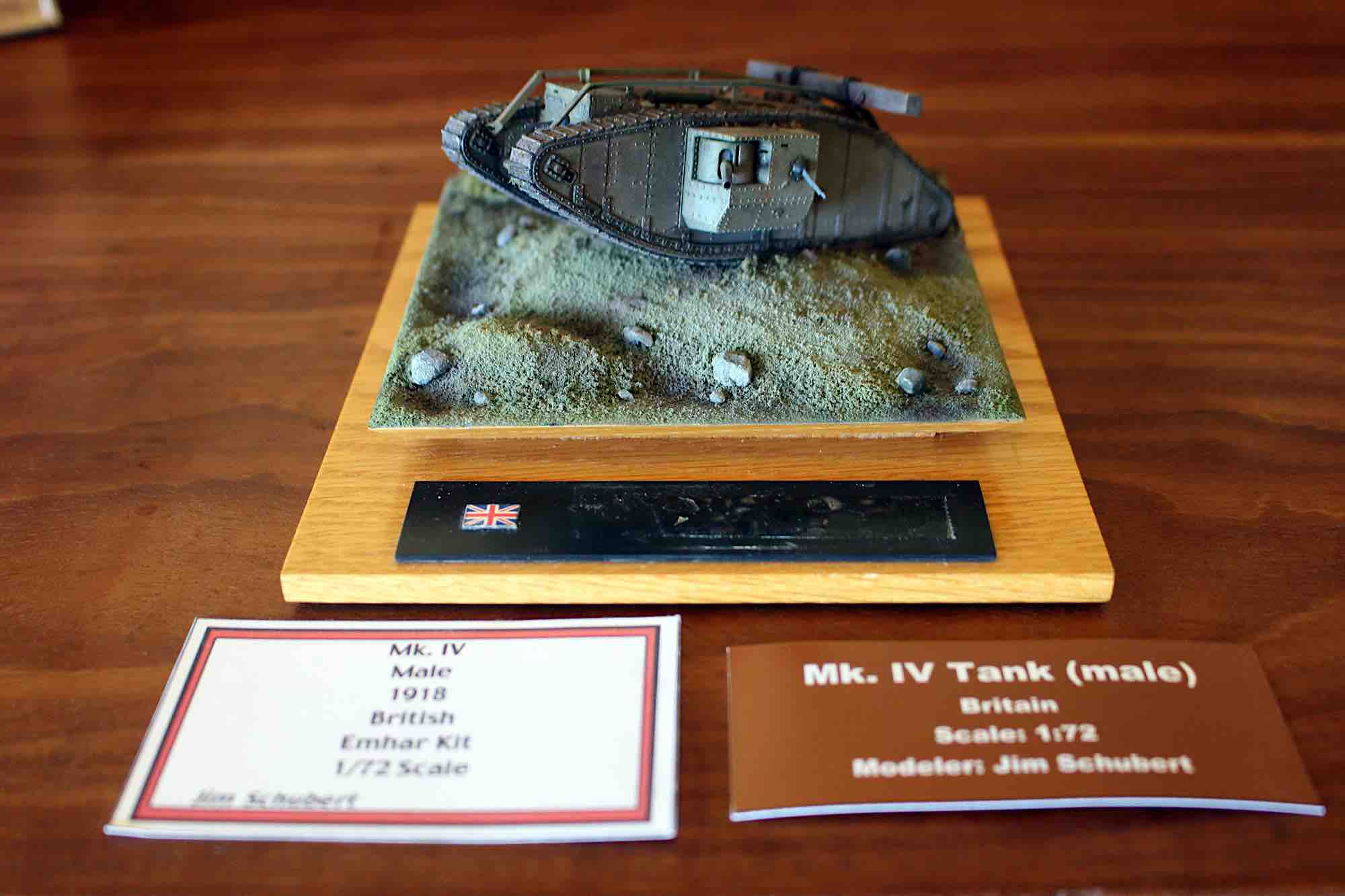
Photograph 22 of 25 · The British Mark IV heavy tank, introduced in 1917, was the first mass-produced tank in history and a pivotal evolution in armored warfare during World War I.
Photograph 23 of 25 · The "Male" vs. "Female" Designation - "Male" Tanks: Outfitted with heavy offensive weapons designed to target enemy fortifications, pillboxes, and artillery. "Female" Tanks: Outfitted strictly with machine guns, intended to defend the "Male" tanks against waves of enemy infantry.
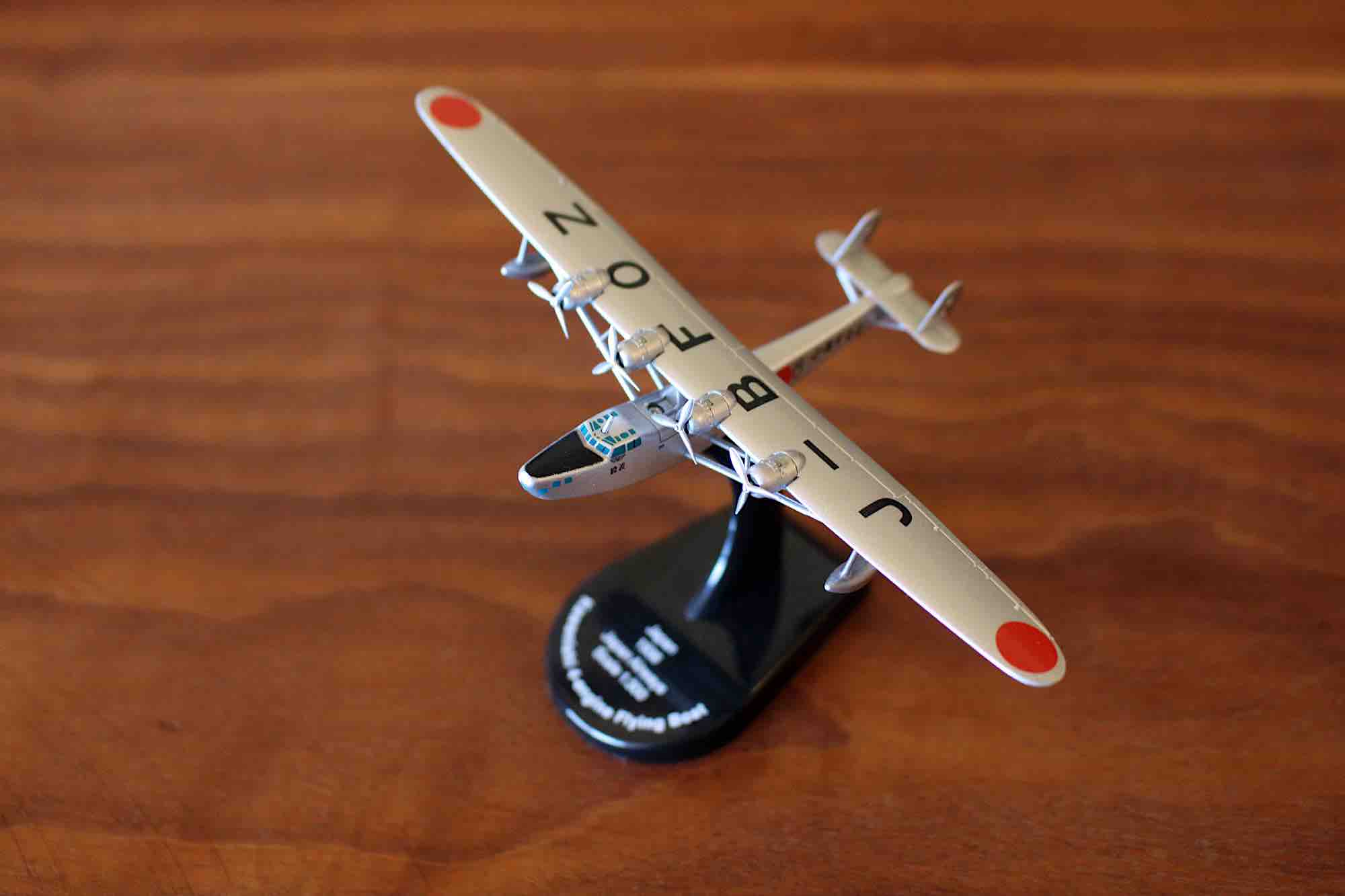
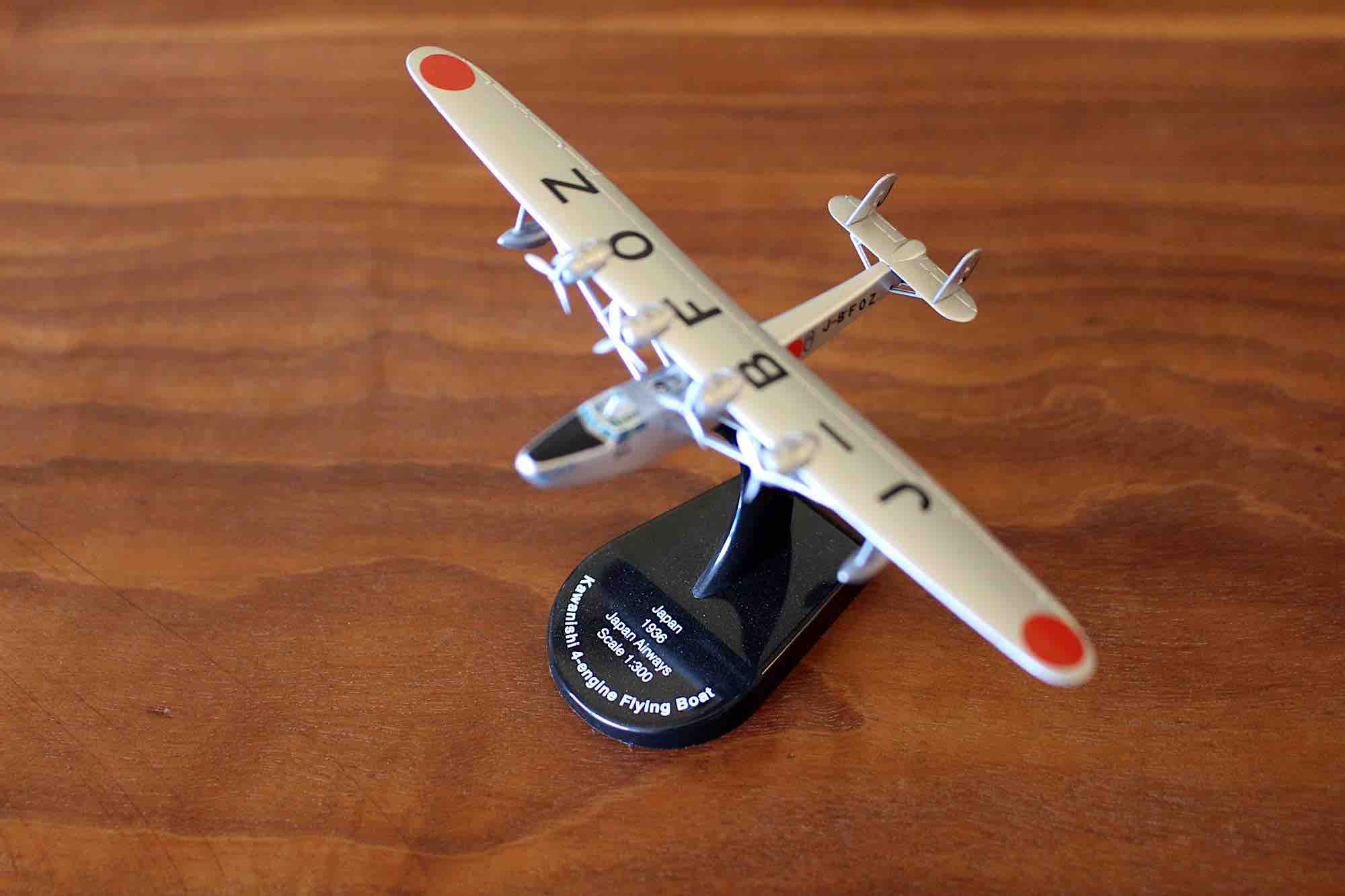
Photograph 24 of 25 · Kawanishi H6K "Mavis" 4-engine flying boat - Designated by the Imperial Japanese Navy as the Type 97 Large Flying Boat. Kawanishi collaborated closely with British aircraft maker Short Brothers to study cutting-edge monoplane hulls. The resulting design utilized an elegant, narrow metal hull suspended beneath a massive 131-foot (40-meter) parasol wing. This elevated wing design effectively kept its four radial engines out of corrosive salt spray during ocean takeoffs and landings.
Photograph 25 of 25 · The Pioneer Variant: Before and during the early phases of World War II, the Japanese national airline, Dai Nippon Koku (Greater Japan Airways), utilized specialized civil transport configurations designated as the H6K2-L and H6K4-L. When the Pacific War fully erupted, the military H6K4 variants were the primary long-range eyes of the Japanese fleet. Armed with defensive machine guns, a 20 mm tail cannon, and carrying up to 2,000 kg of bombs or torpedoes, they shadowed Allied warships over tremendous distances.